Shopping for a deck railing in 2026, you’ll shortlist the same three finalists as everyone else: frameless glass, stainless cable, and aluminum pickets. All three are safe when installed to code. They differ — a lot — in what they cost over ten years, what they do to your view, and how much of your weekend they claim.
Here’s the honest comparison, including where each one genuinely wins.
The 60-Second Verdict
| Glass | Cable | Aluminum | |
|---|---|---|---|
| View | Fully unobstructed | Thin horizontal lines | Vertical pickets |
| Maintenance | Soap and water | Re-tensioning + wire care | Occasional wash; coating ages |
| Wind protection | Yes — solid barrier | None | None |
| Pool-code friendly | Excellent (no climbable members) | Often problematic (climbable horizontals) | Good |
| Materials cost/ft | $$–$$$ | $$ | $ |
| 10-year cost | Lowest upkeep | Tensioning + hardware | Repaint/replace risk |
| DIY difficulty | Moderate (heavy panels) | Moderate (tensioning) | Easy |
| Resale impression | Premium | Modern-industrial | Standard |
Where Aluminum Wins
Aluminum is the budget champion — typically the lowest upfront cost per foot, light, easy to DIY, and available everywhere. For a rental property, a low deck with no view, or a strict budget, it’s a rational pick.
The trade-offs: vertical pickets chop the view into slices; powder coating chalks, chips and oxidizes over the years (especially near salt or pool water); and it adds nothing to resale beyond “there is a railing.”
Where Cable Wins
Cable rail nails the modern-industrial look and keeps sightlines mostly open — thin horizontal wires rather than pickets. Mid-range price, reasonable DIY.
The trade-offs are structural and regulatory. Cables stretch and need periodic re-tensioning to stay code-tight (a loose cable fails the 4-inch-sphere test). Horizontal cables are considered climbable — a real issue anywhere children are around, and specifically restricted around pools in many jurisdictions. Wind and pets pass straight through. And near the coast, standard cable hardware pits and stains.
Where Glass Wins
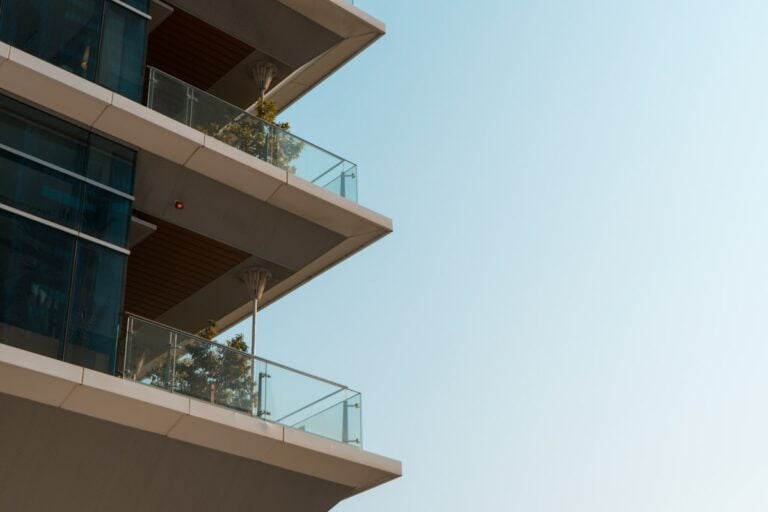
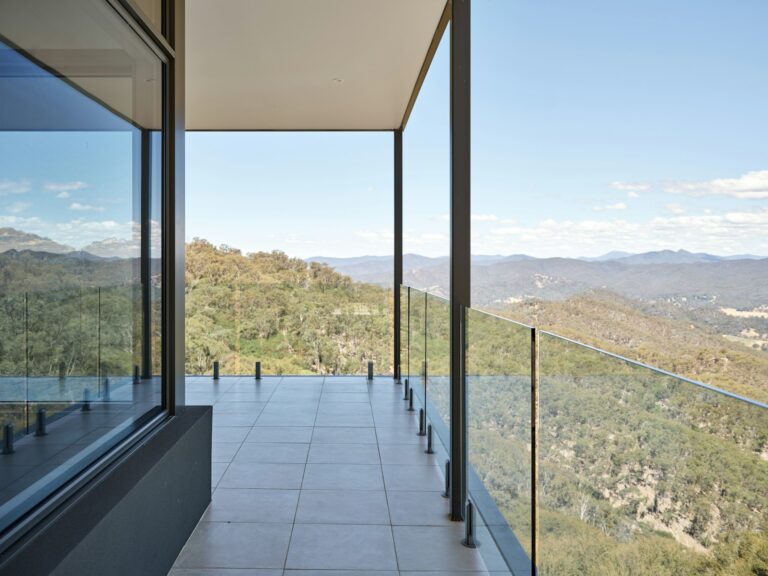
Frameless glass is the view keeper: nothing between your deck and the lake, yard or skyline. It’s also the only one of the three that doubles as a windbreak — a genuine comfort upgrade on exposed decks and rooftops — and the only one with zero climbable members, which is why it’s the pool-fence favorite (48-inch panels, self-closing gates — see our glass pool fence page).
Maintenance is soap, water and a squeegee. There’s no tensioning schedule, no repainting, no rust treatment — with marine-grade hardware, the system outlasts the deck it’s bolted on. On resale, glass consistently reads as the premium option: the deck looks bigger, brighter, newer.
The trade-offs, honestly: higher materials cost than aluminum ($45–$95 per linear foot for a complete ENO system — full breakdown in our cost guide), panels are heavy (installation is a two-person job), and glass shows fingerprints on high-touch sections.
The Hidden Variable: Hardware Grade
Whatever material you pick, the thing that determines whether your railing looks good in year ten is the metal grade of the hardware. Cable systems and glass systems both live or die by it.
Standard 304 stainless (PREN 18) pits within a few seasons around pools or coastal air; 316 (PREN ~24) does better; #2205 duplex (PREN 35) is the marine-grade alloy engineered for exactly that exposure — it’s what every ENO spigot, connector and hinge is machined from, with roughly twice the yield strength of 316. The full engineering logic is on our frameless glass railing systems page.
Code Check, Whatever You Choose
All three materials must meet the same guard rules: typically 36″ height for residential decks (42″ in some jurisdictions), a 200 lb concentrated load, 50 lb per linear foot, and no 4-inch openings — with extra provisions for pools and stairs. Our height requirements guide breaks it down by application; always confirm with your local building department.
Bottom Line
- Tight budget, low deck, no view → aluminum, no shame in it.
- Industrial look, no kids/pool, and you’ll keep up the tensioning → cable.
- A view worth keeping, wind, a pool, or resale value in play → glass — and it’s cheaper than you think when you self-install: draw your deck in the free 2D configurator and see the real number in minutes. More deck specifics on our glass deck railing page.
Frequently Asked Questions
Is glass railing more expensive than cable railing?
Upfront, usually somewhat — a complete ENO glass system runs $45 to $95 per linear foot in materials versus a broadly similar-to-lower range for quality cable systems. Over ten years the gap narrows or reverses: glass has no re-tensioning schedule and no hardware refresh cycle.
Which railing is safest for kids and pools?
Glass. It has no climbable horizontal members and no gaps beyond code openings — which is why frameless glass is the preferred pool-barrier material and why horizontal cable is restricted around pools in many jurisdictions.
Does glass railing block wind?
Yes — it’s the only common railing type that acts as a windbreak while preserving the view, which is why it dominates exposed decks, rooftops and waterfront properties.
Is cable railing hard to maintain?
It’s not hard, but it’s recurring: cables stretch and need periodic re-tensioning to stay tight and code-compliant, and standard-grade wire and fittings can pit near salt or pool water.
Ready to price your project?
Use our free 2D configurator to visualize your glass railing and get instant pricing.
Design my railing